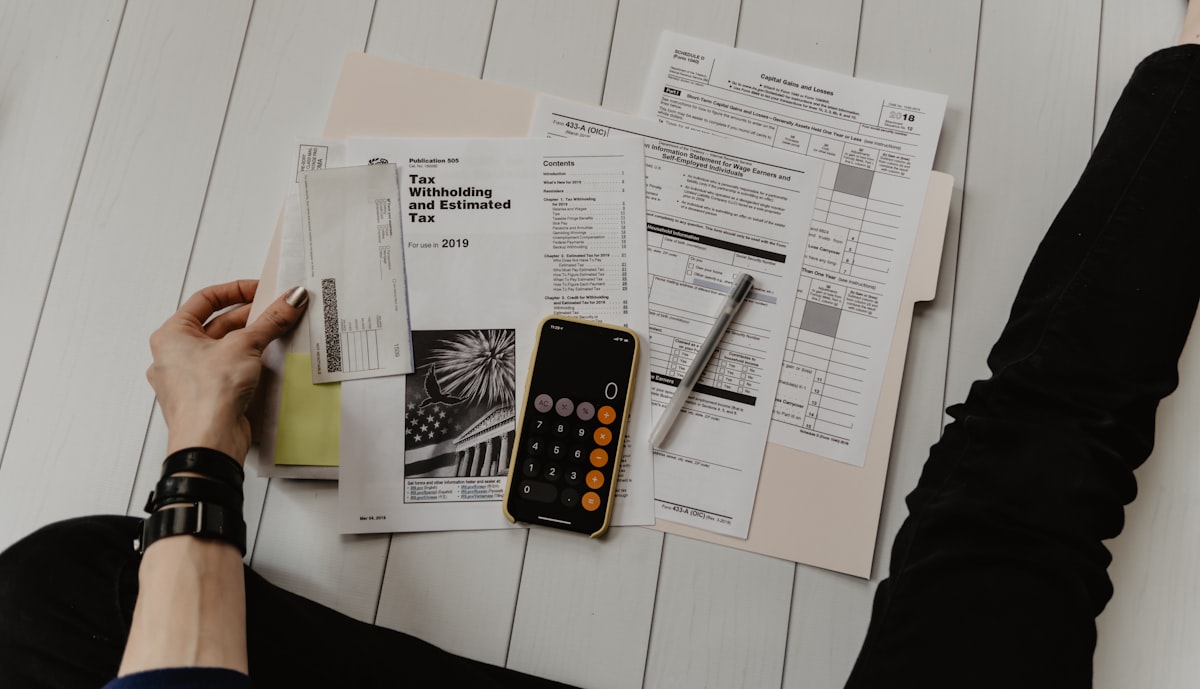
Percentages surround us daily—from the "20% off" signs at stores to the interest rates on our savings accounts. Yet many people feel uncertain when calculating them. Let's demystify percentages and make you confident with this essential skill.
What Is a Percentage?
"Percent" literally means "per hundred." When you see 25%, it means 25 out of every 100, or 25/100, which equals 0.25 as a decimal. This simple concept underlies all percentage calculations.
The Three Basic Percentage Questions
Almost every percentage problem falls into one of three categories:
1. What is X% of Y?
Example: What is 15% of $80?
Solution: 80 × 0.15 = $12
Use case: Calculating tips, discounts, taxes
2. X is what percent of Y?
Example: 30 is what percent of 150?
Solution: (30 ÷ 150) × 100 = 20%
Use case: Test scores, completion rates, market share
3. X is Y% of what number?
Example: 45 is 25% of what?
Solution: 45 ÷ 0.25 = 180
Use case: Finding original prices, reverse engineering totals
Our percentage calculator handles all three types automatically.
Real-World Percentage Applications
Shopping and Discounts
When a $60 shirt is 30% off, you save $18 and pay $42. But what about stacking discounts? A 20% discount followed by an additional 10% off is NOT 30% off—it's actually 28% off the original price. The discount calculator helps with these compound calculations.
Tipping at Restaurants
The standard tip ranges from 15% to 20%. Quick mental math: to find 20%, move the decimal point one place left and double it. For a $45 bill: $4.50 × 2 = $9 tip. Use our tip calculator for precise splitting.
Investment Returns
Understanding percentage gains and losses is crucial for investing. Key insight: a 50% loss requires a 100% gain to break even. If you invest $1,000 and lose 50%, you have $500. To get back to $1,000, you need a 100% gain on $500.
Grade Calculations
Scoring 45 out of 50 points means 90%. To calculate: (45 ÷ 50) × 100 = 90%
Percentage Change: Increases and Decreases
Calculating how much something has changed in percentage terms:
Percentage Change = ((New Value - Old Value) ÷ Old Value) × 100
Examples:
- Your rent went from $1,000 to $1,100: ((1100-1000) ÷ 1000) × 100 = 10% increase
- Gas dropped from $4.00 to $3.50: ((3.50-4.00) ÷ 4.00) × 100 = -12.5% (decrease)
Common Percentage Mistakes
Avoid these frequent errors:
Adding Percentages Incorrectly
A 10% increase followed by a 10% decrease does NOT return you to the original value. Start with $100, increase 10% to $110, decrease 10% to $99. You've lost 1%.
Confusing Percentage Points with Percentages
If interest rates rise from 2% to 3%, that's a 1 percentage point increase, but a 50% relative increase.
Forgetting the Base
Always identify what number represents 100%. "Sales increased 50% from January to February" uses January as the base.
Mental Math Shortcuts
Quick ways to calculate common percentages:
- 10%: Move decimal one place left ($85 → $8.50)
- 5%: Find 10% and halve it
- 15%: Find 10% and add half of it
- 20%: Find 10% and double it
- 25%: Divide by 4
- 50%: Divide by 2
- 1%: Move decimal two places left
Percentages in Data and Statistics
When reading statistics, watch for:
- Sample size: "80% of dentists recommend..." might be based on only 5 dentists
- Time period: Returns can look very different over 1 year vs. 10 years
- What's measured: "Crime decreased 20%" could mean different things depending on how crime is counted
- Denominator shifts: Percentages change when the base changes
Percentages are powerful but can mislead when misunderstood. Regular practice with a percentage calculator builds intuition and helps you catch errors in everyday calculations.